Friday, June 17, 2011

Utopian Storytelling


By John Esterle


What does utopia mean to you?

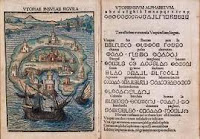
For most of us the word conjures up images of an idyllic world -- so idyllic in fact as to be seen as something that's completely unrealistic or has an inevitable dark, social engineering side to it. Filmmaker Sam Green creatively explores different facets of the notion of utopia and the utopian impluse in both his new documentary, The Universal Language (TWI provided some support) and in his "live" documentary, Utopia in Four Movements, which he's taken on the road this past year.

The Universal Language is a lovely profile of
Esperanto, tinged with hope and sadness, humor and humanity. Watch for it when it comes out. I haven't seen Utopia in Four Movements yet but I hope to someday as it sounds like a compelling answer to a question I often wonder about: What sticks in a media saturated world?

I had a very stimulating lunch with Sam yesterday and we covered a lot of territory in our conversation, including themes that often crop up in this blog: the importance of storytelling, of language, and of attending to
how we engage with each other to imagine and create a better world.

Here's a quote from an
interview Sam did that particularly resonates with me:

"I'm not so interested in "a utopia" -- some kind of place or society that would be utopia. I'm much more interested in the Utopian -- a moment or gesture or act that evokes a radically better world. Art, I think, can certainly do this. In fact, art is very well-suited for the task. My own personal feeling is that art that is proscriptive, that flattens things out to bullet points and clear-cut answers is often dull. What I like is art that embraces complexity and contradiction and the messiness of human experience and who we are. I like art that opens up possibilities."

Besides agreeing with what he says here, I'm struck at how I could replace "art" with "dialogue" and it have it still ring true for me.

Anyway, as I look out my window on a sunny San Francisco day (it's been cold and gray a lot lately) I'm thinking of how dreaming big links with being in the moment, and of how TWI's vision is grounded in -- dare I say -- a Utopian belief that we can transform our world one conversation, one connection, one relationship at a time.

Wednesday, June 8, 2011

Giving on the Right-Side of the Brain: Beauty = Truth


By CJ Callen


"Beauty is truth, truth beauty - that is all ye know on earth, and all ye need to know” – Jon Keats

"All truths are easy to understand once they are discovered; the point is to discover them.” - Galileo Galilei

Once I took a night class on “drawing on the right-side of the brain” based on the book of the same title. The instructor asked us to draw a flower and so I dutifully conjured up from my head that lame representative image that I placed on paper. Next she placed a real flower on the table and talked to us about using our right brain to see the flower. I then drew a flower, capturing its intricate lines and its spirit – the real beauty of nature in front of me. I was startled; I can draw! I sometimes show people the “before and after” drawings and they cannot believe that the same person did both. Truth is stranger than fiction.

That was a powerful lesson about the difference between using the left brain (logical, sequential, rational, analytical, objective, looks at parts) and using the right brain (random, intuitive, holistic, synthesizing, sees the whole). Since then, I have let go to tap into my right-brain, which is oddly predominant given I am a trained lawyer (but not so odd given that I am also a daydreamer and student of philosophy). As a board member of a foundation with an unusual and explicit focus on process, I delight at the opportunities to put my right brain to use to engage in some right-brained philanthropy. Yes, that does exist and there even is a blog spot devoted to the subject http://rightbrainphilanthropy.blogspot.com/

I would like to add to the conversation the notion of the art of philanthropy. I ask others to think of the promising possibilities that would emerge if philanthropy embraced right-brained approaches that are driven by aesthetics. And since truth is beauty, well, you can see where I am going.

For all that philanthropy is doing to help solve the world’s problems, it is set-up for failure if its “house of problem-solving” is not built on truth. My simple proposition is that using the right brain to see the true lines and complexity of everything – whether flower, social construct, or pressing social issue – is indispensable to forging real solutions. A strategy is really just a proposition and those are more likely to test well and seed solutions if firmly planted in the truth.

Now sometimes that truth might not be as beautiful as a flower but it will have its own beauty, sure enough. I always say that the one thing that inspires me is “beauty” and everything falls from that.

If philanthropy re-organizes itself on this principle by moving confidently into solidly right-brain territory and leading like artists inspired by beauty/truth, I can only imagine what fruits it/we might bare. If nothing else, it/we have nothing to lose in trying it on for size since the world is in dire need of saving. My wish: let philanthropy discover its own truth and beauty through deeper appreciation and valuation of all things right-brained.

At TWI we are having a board retreat this summer and now I have a new goal: working with my fellow board members and the TWI staff and leadership on ways that we as a foundation can model right-brained philanthropy.

If you’re interested, I will let you know how it goes. Oh heck, I will let you know anyway because it sounds like a good story worth telling.

Friday, June 3, 2011

Milllenials: From the Next Generation to the Now Generation


By Pia Infante


Whenever I hear the phrase "the next generation," the first notion that comes to mind is the Star Trek: Next Generation t.v. series which ran from 1987 to 1994. Wow. As I write this I'm realizing this is not a current pop culture reference - dating me as the Gen X'er that I am!

I use it here to refer to Millennials - the generation born roughly between 1980 and 2000. And I've been reminded of the phrase because I was pleased to see that a couple of Millennial leaders from our TWI midst have been recently recognized as folks who have already stepped into their potential as the Now generation, not the Next.

Congratulations Ayofemi Kirby, of mobilize.org, and Amy Lazarus, of Sustained Dialogue Campus Network!

The Independent Sector has announced Ayofemi and Amy as members of the 2011 American Express NGen Fellows. This 9-month fellowship is designed to expand and develop the (under 40) non-profit leadership pool's leadership skills and practices.

Ayofemi is the Director of Strategy and Programs for mobilize.org, a long time grantee partner of TWI's and Amy is the Executive Director of the Sustained Dialogue Campus Network, a newer grantee partner of ours.

We are delighted to see their leadership acknowledged and curious to understand how TWI might better support the trajectory of Now vs. Next.


Wednesday, May 25, 2011

Life 4.0: Bringing the worlds together


By Kyra Epstein


“Our modern western civilization began with a kind of cultural schizophrenia. Our scientific enterprise effectively decoupled itself from our humanistic-spiritual traditions at the beginning of the modern period…we can perhaps dare to ask if this was such a good idea, this splitting up of the universe.”
--Brian Swimme, The Universe Is a Green Dragon

Do you ever feel like your life is divided into little compartments? Open up one "file" and you are at work, open another and there is your family; others hold community or passionate hobbies?

I have felt like that, particularly since my life has led me in such seemingly disparate directions: writing/communications in the energy efficiency field, teaching as an adjunct professor in Colorado, pursuit of many mystical/spiritual traditions, studying and starting a small business in herbal healing and teas.

Earlier in my life, my 20s and 30s, I embraced this kind of fast-paced multi-tasking--especially since it meant I didn't have to have one full-time job sitting in an office all day. It was a challenge to see how all the pieces would get accomplished, to grow the contents of each "file" and hold all the pieces together. Working primarily with scientists and engineers—and growing up with mathematicians—I never questioned why it seemed inappropriate to bring emotion into a discussion, talk about creative process, or be anything other than an efficient and logical professional. The messy, wild, colorful and mysterious parts of myself were tucked away until after hours, if they even appeared then.

Now that I am in my 40s, I'm not as eager a multi-tasker, and I don't have nearly as much energy. Tendrils of my hair, once kept back straight in a hairclip, have begun to escape in unruly protest. I have felt a growing desire to see all the file folders merged.

I want to be able to be the same person when I'm working with a scientist from the Department of Energy that I am when I'm distilling essential oil from lavender, hiking in the new moon dark, spending time with friends/family, or when I'm with my aging parents. I want the messy and colorful to mingle with the efficient; the logical with the wild and mysterious. I want to be more fully me, all of the time.

I see my work with The New School at Commonweal, which I started almost a year ago, as one precious response to the intention for integration. Commonweal is a place where many of these parts of myself can come together. It is one of the most eclectic organizations I’ve been involved with, and it is a great container, holding all the parts of all of us that work there together.

As an example, I can arrive at work, share in a group meditation as part of a planning meeting, help host a scientist as she speaks about toxics in the environment, participate in a series of emotional discussions on end-of-life issues, and serve herbal tea to a group that truly understands the connection between plants, the earth, and healing. The file folders dissolve, and there are no "roles," only what we each bring to the discussion, to the group, and to the effort at hand.

I see Commonweal as a model for how we can begin to integrate and heal our selves just as we are working to integrate our communities and heal the earth. It's been a launching pad for me to meet other people and organizations (like The Whitman Institute) on similar journeys. And it is a safe place for testing the waters. With any luck, and another few decades of experience, I'll begin to cure the "cultural schizophrenia" within myself and help to bring the worlds together again.

Wednesday, May 18, 2011

No time for Learning?


By John Esterle

May 19, 2011


How do you build in learning when there's no time to learn?


Grantcraft asked its readers (primarily grantmakers) that question and over 1,400 people responded. Grantcraft has captured the major themes that emerged from this survey in a concise new paper they just put out. Here are their main recommendations:


1. Establish a culture of learning by building learning into routine processes.
2. Raise the profile of learning by noticing when it happens and naming it explicitly.
3. Cultivate personal habits of learning that work for you.
4. Try new activities - but choose wisely and keep things simple.

They also note that a supportive learning environment has four characteristics: psychological safety, appreciation of differences, openness to new ideas, and time for reflection. I applaud Grantcraft for raising up the importance of learning but I must say that part of me felt really saddened by the paper's premise that there's no time to learn for many grantmakers. If that's the case, there's something really wrong with that picture and I'm afraid their recommendations might only nibble at the edges of rectifying it.

As I read I also couldn't help but wonder if we're overloading multiple meanings on the word
learning in a way that's akin to what we sometimes do with leadership. These words become catch-all umbrellas that provide cover in sense for a lot of processes and characteristics. The paper quotes people who frequently mention how important it is to create time to reflect, to ask questions, to engage in different kinds of discussions and conversations, so what if we started using some of that language to explicitly describe the organizational cultures we want to create rather than learning?

How would we react to this paper be if it was titled, "How do you build in
critical thinking when there's no time to think?" Does that feel edgier? More challenging? What if we talked about thinking organizations rather than learning organizations? We could even talk about creating supportive critical thinking environments and use the same criteria as above: psychological safety, appreciation of differences, openness to ideas, and time for reflection.

In short, what if we started raising the importance of critical thinking within philanthropy? Because if we're not creating the time to really think in and across our organizations (isn't learning linked to thinking?) what are we doing? Where is all that time going? Like TWI's tag line says, it's time to think for a change.

Tuesday, May 10, 2011

Whose Story?


May 10, 2011

By Jill Blair


Shalom!


Context: I proudly chair the board of TWI and hold a deep and abiding commitment to the power of process and dialogue. I live according to the belief that it is only what we work our way through in words and feelings that we are able to truly embrace and embody. I have always relied on stories to help me understand and to convey my understanding to others.


Living & Learning Abroad


Today is May 10, 2011. I am seated at our breakfast/dining table in our rental apartment in Jerusalem, Israel. Our family has been living here since August 2, 2010 and we are scheduled to remain until August 15, 2011. My partner, Fay, was offered an opportunity to work here for the year and she and I agreed that a year-abroad would be a growth experience for us and our two children. We have always been deeply attached to this country– by our religion, family, friends and fundamentally by our beliefs. Throughout this year I have kept a log to monitor our experiences and reactions to them. Sometimes I have used the log as a therapeutic tool to work my way through complicated matters. Kismet placed us here in the Middle East during interesting and turbulent times – the politics of the region that are ordinarily intense and complex have been more so – with uprisings and public demands for democracy and decency in governance and leadership.


As we enter our fourth and final quarter of this remarkable adventure, I am struck by how much I have learned and how much more there is to learn – in particular about the meaning of story. Story is never neutral, never new, and still necessary.


Happening Here…


This past week, including now today, are very important times in the State of Israel. Last week was Yom HaShoah – Holocaust Remembrance Day; yesterday, Monday, was Yom HaZikaron – honoring those who have given their lives in defense of Israel; and today, Tuesday, is Yom Ha’atzmaut – Israeli Independence Day, celebrating the establishment of the State of Israel.


My son and daughter attend an American International School here in Jerusalem. I volunteer there three days a week – mostly in the 4th grade classroom. The school of 100 students is a complicated quilt of colors, religions and languages with children from all over the world. The only thing they have in common are parents who want them educated in English.


Last week, on Yom HaShoah, the fourth grade teacher and I talked with the children about Anne Frank – who she was and what happened to her and her family. We had photographs up on the screen and short essays we read aloud. To commemorate those who died during the Holocaust, at precisely 10:00 a.m., sirens rang across the entire country for a full two minutes. Everyone stopped what they were doing. If you were driving on the highway, you stopped your car and got out. If you were walking to the market, you stopped your steps and stood still. After the lesson and the sirens, we asked the fourth graders to reflect on the meaning of what we had learned and witnessed. We asked them to write words or draw pictures – and we asked them to share.


Logan raised his hand and in an unsettled voice, began to read what he had written. “If I was alive during the Holocaust I would have been in the army in Germany and I would have been doing these terrible things to the Jews.”


The teacher and I caught one another’s eyes.


Whose story?


Yesterday was, Yom HaZikaron. At 11:00 a.m. the sirens blared once again. This time, the fourth grade teacher and I were particularly sensitive to how we described the meaning of this day. We explained, “Today we honor the fallen,” careful not to say more. In fact, Yom HaZikaron is specifically a day of remembrance of those who have died in the wars that Israel has endured in its struggle for independence and survival. It is solemn. Across the country high schools hold ceremonies in honor of their alumni who have fallen. Soldiers swarm the streets…there is a huge ceremony at the grave of Theodore Herzl – just down the street from where we are now living. The Israeli flag flies at half-mast.


One of our son’s closest friends is an Arab Israeli who is also a Muslim. He listens to our explanation of the day and pipes up, “I am not allowed to fight in the army…my religion prevents me from fighting against my own people.”


Whose story?


As Yom HaZikaron drew to a close last night, fireworks ushered in the start of Israeli Independence Day. The flag of Israel returned to full mast. Today there will be barbecues across the country. But most Palestinians and even some Arab Israelis who live in and are citizens of the State of Israel, observe this day as “Nakba,” – a tragic day, literally translated it means “catastrophe.”


Whose story?


The Meaning of Sound…


The sirens that echo across the country in honor of these events are the same sires that are used to warn us of rocket or missile attacks. In this latter case, we are also expected to stop in our tracks – and then find a “safe” and “sealed” room to avoid injury.


At dinner last night, before taking our daughter to a party outside of Jerusalem, our son asked the following, “What would happen if there was a rocket attack at the exact same moment that there is a siren commemorating Yom HaZikaron? How would we know the difference?”


Throughout this year our children have peppered us with questions. Often we have no answers but on countless nights these questions are the basis of our family dialogues.


“That is a good question,” we say, “and really worth thinking more about.”


Same siren…different story.


Thursday, May 5, 2011

Trustworthy Opponents


May 5, 2011

by Pia Infante

I have to admit that I'm a basketball fan, and there is no time like the playoffs to be watching basketball. Actually, it turns out that this season's playoffs are the most highly watched season in the history of the NBA. From what I can discern - people are watching because there are some well matched teams, there is really no clear and dominant winner (including, you, Lakers), and while there are rules, there is no script. So what unfolds is somewhat unpredictable - and true fans seem to revel in the surprise element.

What does this have to do with dialogue and civic engagement, you may be wondering?

Well, as I was reflecting on the notion of a "good match-up" (when two players who play the same position on opposing teams are evenly matched, it's fun to watch the kind of game within the game between them) - the concepts of respectful contestation and trustworthy opponents came up unbidden. I actually posted about these notions, put forth by the Foundation for Interreligious Diplomacy in December of 2009.

In a playoff game, while surely there's a rash of elbow bumps and brushes that are not called foul - there is a mechanism for holding the line around disrespectful engagement. Players and coaches can be ejected from the game, even the league, for out of line aggression or verbal threats towards other players, coaches, and referees. I appreciate this accountability for good sportsmanship and wish we there was a similar sensibility, say, in the House of Representatives or the Senate - at the state or national level.

What if there were a referee blowing a whistle on bad behavior and language on the Senate floor?

I want to raise up the premise that conflict can be a powerful learning experience if there exists, at the base of it, a deep respect for difference and a willingness to hear into the space between and be changed by it. To me, the NBA demonstrates more respectful contestation than what I often hear reported back from many of our representative democratic bodies, embroiled in partisan politics and back room deals.

I truly believe that trustworthy opponents can sometimes help me learn what I might never learn from a trusted confidant who never questions my premises or leans into the dissonances of my thinking. Similarly, forgive another basketball reference, point guard Rajon Rando of the Celtics matched up against Derrick Rose of the Bulls could bring into being a level of playing that neither could achieve individually. They seem to be a good match-up, and I for one, would love to see them play against each other in the playoffs.

In my estimation, there can be no shortage of narratives that tell the story of how respectful contestation and trustworthy opponents are necessary ingredients in an engaged and vibrant life - individually and collectively.

Do you have a story about a trustworthy opponent who's helped evolve your consciousness?

The Foundation for Interreligious Diplomacy is actually seeking out stories for publication. So, if you have a story you'd be open to sharing with the world - send it along and perhaps receive $100 for your effort.

As always, because I consider you, dear readers, to be potential trustworthy opponents in the dialogic space we share - I welcome your considerations, stories, challenges, and questions...